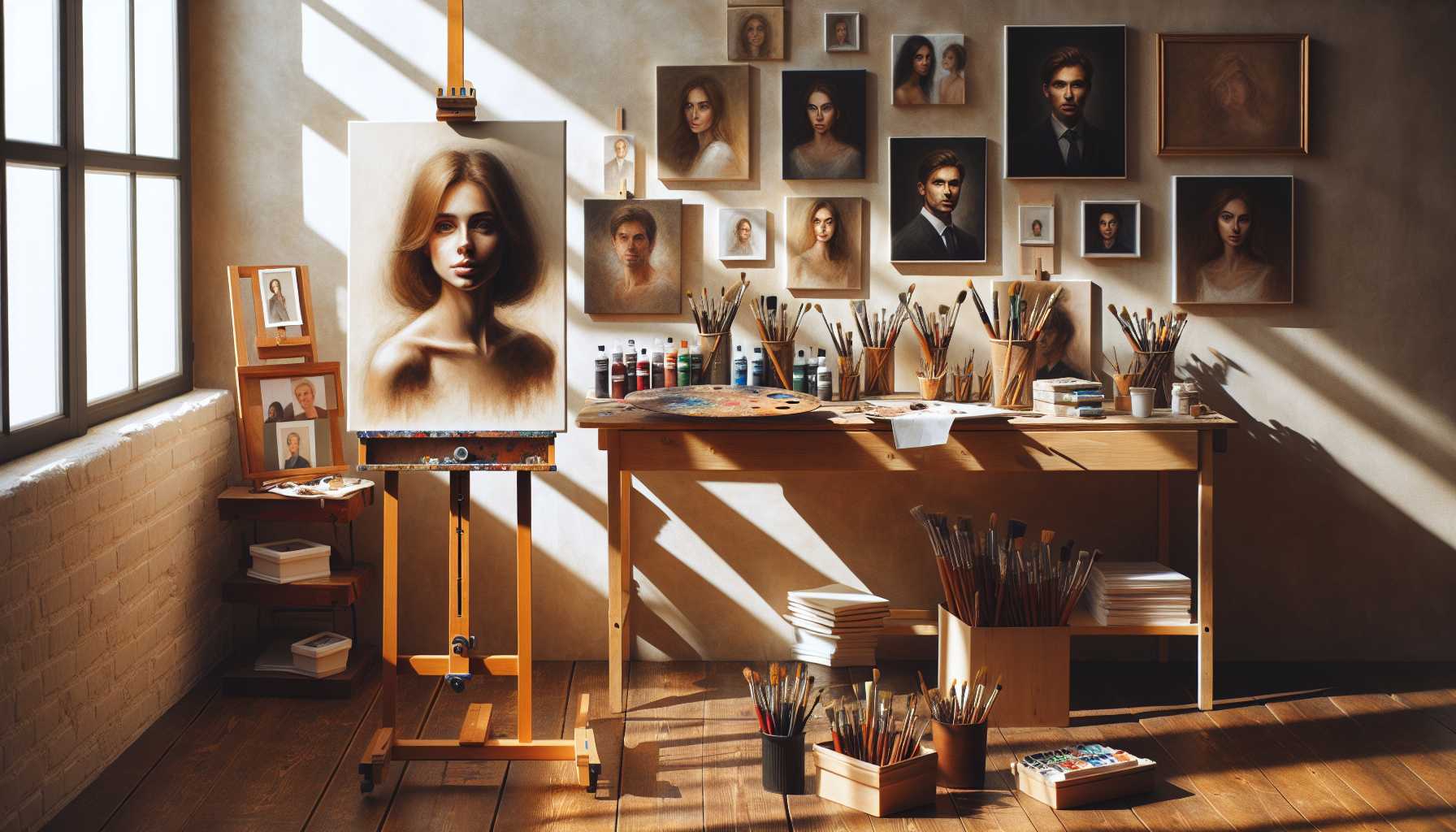
Initiating your journey into the field of portrait commissioning can seem daunting. There’s a whole world of unknowns, from pricing to contracts, and knowing where to begin is a challenge. Fear not though, we’ve been in your shoes and are here to help. We’ve pulled together this guide, all from our own experiences over the years, to make your foray into the field much less stressful.
Getting to Grips with Portrait Commissions
Portrait commissions involve creating unique pieces of art specifically tailored to clients’ requirements. These aren’t just any type of artwork, but rather, they are deeply sentimental pieces that capture memories, personify beloved ones or serve as tangible reminders of significant life milestones.
As the commissioned artist, your role is not just to paint or draw. You’re tasked with creating something meaningful and valuable to someone. It can seem like a lot of pressure, but the satisfaction that comes from seeing your work appreciated is truly worth every bit of it.
Settling on An Appropriate Commission Price
Coming up with the right price initially seems like a daunting task. Many artists have a tendency to undervalue their work, and this is a trap you should aim to avoid.
Start by considering your skill level, experience, and what standard rates are like in your locale to determine your hourly rate. Your pricing should reflect time spent painting or sketching, initial consultation with clients, time for revisions, costs of materials, and overhead expenses.
To give you an idea of timing, a simple portrait could take anywhere from 10-20 hours, while a detailed piece could cross the 40-hour mark. Timing yourself when practicing will provide a more accurate estimation. And remember, this is not a hobby but a business, so always include a profit margin when setting your prices.
Making Contracts Professional and Clear
It cannot be overstated: always have a contract. Every single time.
Your contract should include important details such as the final price, payment schedule, timeline and deadlines for the project, number of revisions allowed, expectations if major changes are requested, the cancellation policy, and who retains usage rights of the artwork.
By asking for a 50% deposit upfront, you are assured of commitment from your client, with the balance due upon completion of the project. Be clear on the revision limits; for instance, if you typically offer 2-3 revisions, outline that and note that any significant changes will come at an additional cost.
A Step-by-Step Breakdown of The Commission Process
Initial Consultation
Understanding your client’s vision is crucial to your project’s success. Ask questions about the preferred style, the timeline, subject of the piece, and their reasoning for commissioning the artwork.
Take notes during this initial discussion, as it informs your execution of the project.
Obtaining and Using Reference Photos
Quality reference photos can elevate a portrait from good to great. Guide your clients on the type of photos you need.
High-resolution photos taken from different angles will provide a comprehensive view of the subject. Good lighting will reveal important details that might otherwise be missed.
If the photos provided are subpar, consider offering a photo session service. Many clients will be more than willing to accommodate this to ensure high-quality pieces.
Artwork Creation
Begin with rough drafts of the concept which can be shared with the client for early approval. This tip helps in avoiding wasting time in case of required changes.
Make sure to work through stages. Begin with capturing major aspects and gradually add details. It’s also advisable to take photos during the production process so you can share updates.
Quality should always be paramount over speed.
Client Communication Throughout The Commission Process
Establish expectations for communication early on, including the frequency of updates and your response time to queries.
Keeping clients in the loop through progress photos allows them to take part in the creation process. Timely responses to their messages will also enhance the client relationship.
Handling Difficult Circumstances
When Clients Request Major Changes
There may come a time when a client requests substantial changes well into the project. Remain composed and professional.
Discuss the implications of the changes, both in terms of cost and duration for completion. Refer to the terms of the contract if necessary.
Most reasonable clients will understand. On the other hand, you may find that those who don’t may not have been the best fit for you as an artist.
Dealing with Unrealistic Client Expectations
Some clients may have high expectations, such as reversing the age of a pet or making significant changes to facial features.
Establish the limits to your abilities early on. Show them other pieces of your work as a reality check to prevent future disagreements.
Payments and Other Financial Matters
Unfortunately, late payments can occur. Be prepared with procedures in place when this happens.
Start by sending friendly reminders. If the payment is significantly delayed, consider ceasing work until the payment issue is addressed.
Late fees and work suspension conditions ought to be made clear in your contract.
Building Towards Long-Term Success
Developing Your Portfolio
Document every commission (with permission), showcasing the range of your abilities. Share photos of your “before and after” artwork that show your talent for transforming reference photos into masterpieces.
For visibility, tag your work properly on social media and use relevant hashtags to extend your reach to potential clients.
Developing Client Relationships
Satisfied clients often provide referrals. Therefore, strive to treat every commission as an opportunity for further business.
Reach out after completion and delivery to see if they liked the final artwork. Testimonials from clients can also be beneficial.
Occasionally check in with past clients by sending holiday greetings, or sharing art-related tips.
Improving Your Craft
The learning process should never stop. Attend workshops, watch online tutorials and learn new techniques.
Ask your clients for frank feedback. What do they appreciate about your work? How can you improve? What do they wish had been different?
Studying other commissioned artists can also provide insights into best practices regarding pricing, communication, and marketing.
Advertising and Marketing Your Commission Services
Building an Online Presence
Your website should clearly provide information about your commission process, costs, and how to get in contact.
Utilize social media to share progress photos, completed pieces, and behind-the-scenes content.
For local clients, having a Google My Business listing can be beneficial. Many people use “portrait artist near me” keywords to search for local services.
Networking
Join local art functions and business networks. Show your artwork at local events and venues.
Word-of-mouth remains a powerful means to get work, as people often trust recommendations from those they know. Building partnerships with businesses related to your field such as frame shops, interior designers, and photographers can also provide client referrals.
Identifying Seasonal Opportunities
Certain times of the year bring a surge in commission requests. Plan early for peak seasons like Christmas, Mother’s Day, and graduation periods.
Wedding portrait commissions often peak in spring and summer, while pet portraits requests are evenly spread year-round. To make the most of these opportunities, strategize your marketing efforts accordingly.
Final Points to Consider
Portrait commissions can provide a steady source of income, but success requires more than just artistic talent.
Understanding business operations (contracts, communication, marketing, and customer service) all contributes to your success in the art commissioning world.
Starting small and learning from each project will gradually build your reputation, even if the first few commissions don’t turn out perfect.
Always remember: as a commissioning artist, you’re not just creating art. You’re creating memories and making contributions towards personal happiness.
The world of art can certainly use more professional commissioned artists, and with careful planning and focused execution, you can forge a thriving career in commissioned artwork. You don’t just create art. You preserve memories and spread joy through your work. That truly makes what you do extraordinary.