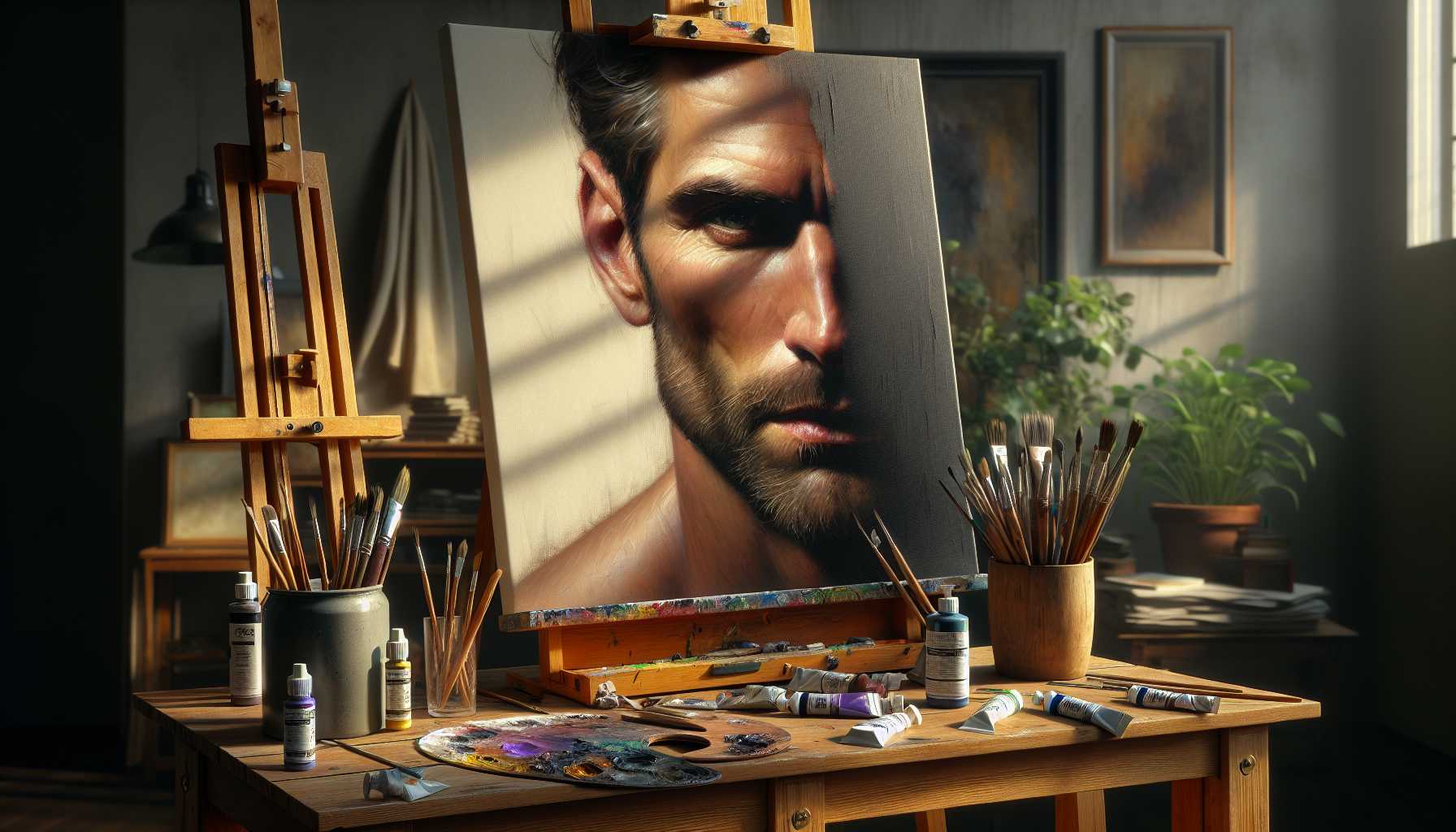
Initially, the prospect of painting male portraits might seem daunting. However, with the appropriate techniques and artistic insight, you can brilliantly capture masculine features and authentically portray your subject’s character.
Let us guide you step-by-step through the vital aspects of painting male portraits.
Insights Into The Male Facial Structure
Distinctive attributes distinguish male faces from female portraits. Identifying these differences early on in your painting journey is crucial.
Typically, men have wider foreheads and more robust jawlines. Their cheekbones are higher and more pronounced. Furthermore, a male’s overall facial structure is more angular rather than curved.
Pay extra attention to the brow ridge as it’s usually more prominent in males, creating deeper shading around the eyes.
Decoding the Male Eye Shape
In male portraits, the eyes provide a window to the soul. Accurately capturing them is pivotal for the success of your painting.
Male eyes often seem smaller due to denser brows. The upper eyelid is generally less visible compared to female portraits, thus creating a more intense, focused gaze.
Start by adding darker tones around the eye socket, gradually building up shadows under the brow bone. Also, take note of the thickness of male eyelashes – they tend to be darker and less abundant than female lashes.
Painting Strong Jawlines and Chin Features
A well-defined jawline is iconic of masculine strength in portrait painting, thus, requiring meticulous attention to accurately depict a powerful male presence.
Confident brushstrokes are best when illustrating the male jaw. Typically, male chins are wider with a squarer shape. Avoid soft, rounded corners which may impart feminine characteristics to the portrait.
Incorporating subtle shadows beneath the jawline adds dimension and highlights the masculine bone structure you’re striving to portray.
How to Painting Male Nose Features
Male noses are usually larger and more pronounced than those of females, often with straighter bridges and wider nostrils.
When painting the nose, led by bold, decisive strokes. Don’t shy away from making it a notable feature of the portrait. The nose bridge often captures more light; therefore, lighter tones are beneficial here.
Adding subtle shadows on both sides of the nose enhances depth and the three-dimensional perspective of your painting.
Dealing with Male Lip Structure
Male lips require a different approach than female lips when it comes to portrait painting as they are generally thinner and less defined.
Don’t exaggerate male lips by making them too plump or glossy. Opt for muted colors – consider subdued pinks and browns over vibrant reds. The highlight here is understatement, not emphasis.
Pay close attention to the shadow beneath the bottom lip. This small detail adds substantial depth to the mouth area.
Representing Realistic Male Hair Textures
Male hair introduces unique challenges and opportunities in portrait painting. Techniques for short hairstyles, beards, and mustaches vary considerably.
Work out the general mass of hair initially, then add individual strands. Male hair tends to be more textured and rougher than female hair.
For facial hair, short, choppy brushstrokes work best. Gradually build up the beard, moving from dark base colors to lighter highlights.
Choosing the Color Palette for Male Portraits
Choosing suitable colors sets the tone for your entire portrait. Male portraits often benefit from a slightly different color selection.
Earth tones like warm browns, subtle oranges, and muted yellows are perfect for capturing male skin. Avoid overly pink or rosy tones as they might soften the portrait’s masculine effect.
For shadows, opt for cooler purples and blues. These tones create a pleasant contrast and add depth to the portrait.
Techniques for Manipulating Light and Shadows
Strong, dramatic lighting can beautifully emphasize the masculine features. Directional lighting creates bold shadows that define the male bone structure.
Don’t shy away from deep shadows as they impart mystery and strength to the portrait. Implement them around the eyes, under the cheekbones, and along the jawline.
Use highlights strategically to emphasize strong masculine features, placing them on the forehead, the bridge of the nose, and the chin.
Common Pitfalls to Steer Clear Of
Even for seasoned artists, mistakes while painting male portraits are commonplace. Here are the usual missteps to avoid.
Be wary of overly softening features. Male portraits call for sharp edges and angular lines. Over-blending might feminize your subject.
Don’t ignore the neck and shoulders. They contribute to the overall masculine demeanor. Broad shoulders and a muscular neck complement your facial work.
Introducing Character and Personality
The most successful male portraits do more than merely capture physical accuracy. They embody the subject’s personality and character.
Seek out unique features that bring your subject to life. These details might be laugh lines around the eye or a notable scar.
Pay close attention to the expression. A hint of a smile, a stern gaze, or a pensive look can drastically influence your portrait’s overall impression.
Applying Final Touches and Refinements
The ultimate stages of your male portrait painting are critical. This phase is when you make those final tweaks that bring everything together.
Regularly step away from your painting to observe your progress. Monitor whether the masculine features are accurately portrayed from a distance and make any necessary adjustments.
Incorporate subtle details like individual eyelashes, skin textures, or strands of hair. But remember, sometimes less is more.
The Importance of Practice
Like any artistic skill, improving your prowess at painting male portraits comes with practice. Start with simple compositions and progressively take on more complex pieces.
Observe male faces in real life, noting how light falls on their different features. Understanding these dynamics will notably boost your painting skills.
Don’t be disheartened if your initial attempts fall short of perfection. Every skilled artist began where you are now.
At its core, painting male portraits is about capturing strength, character, and masculinity. Armed with these techniques and a diligent practice routine, you’ll craft male portraits that powerfully resonate with viewers.
Keep evolving your skills, stay dedicated to learning and above all, cherish the journey of capturing the vibrancy of masculine features onto canvas.