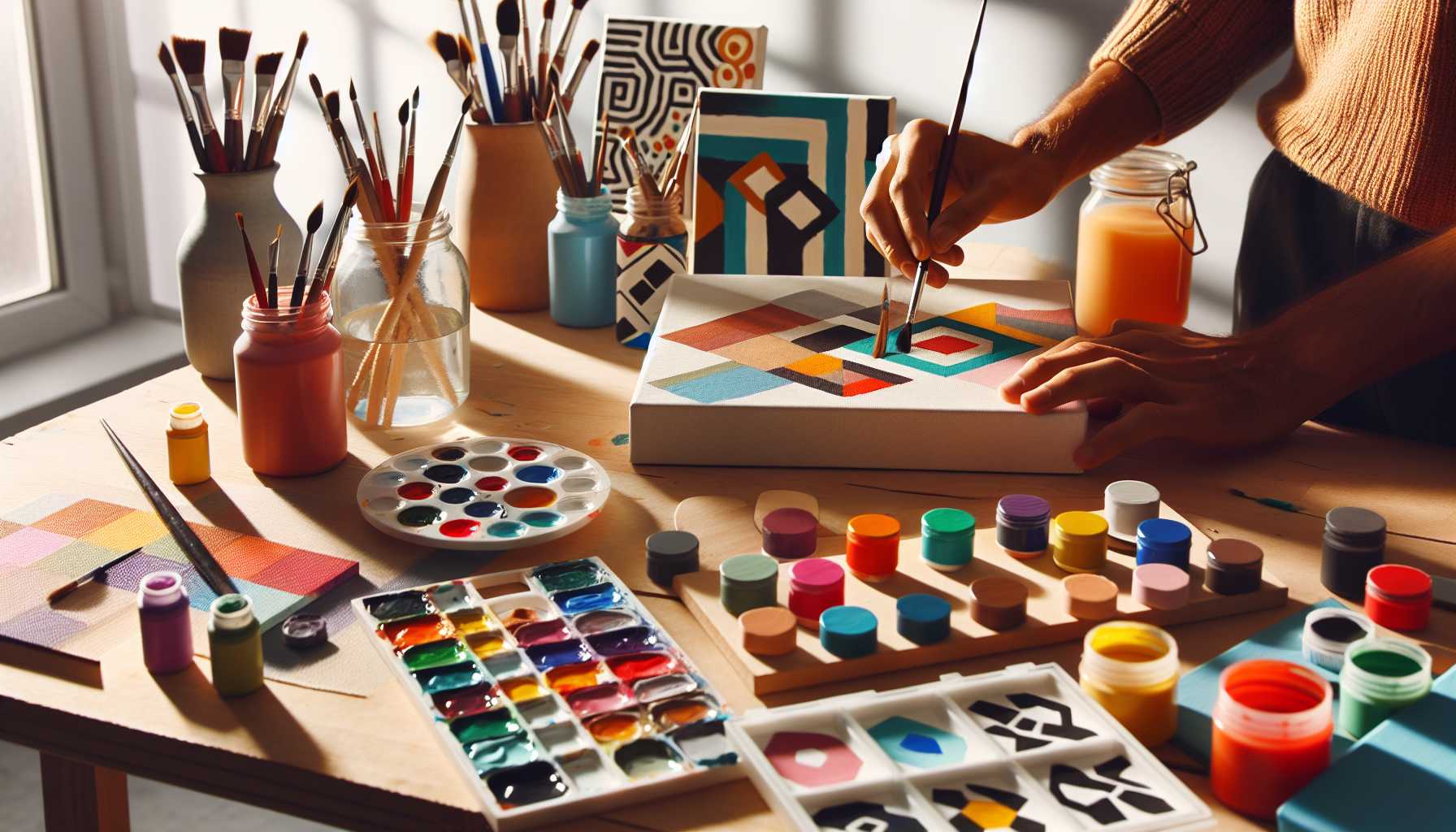
Is the thought of exploring the fascinating world of pattern painting appealing to you? If you’re a beginner and haven’t really taken up painting before, you’re in for a joyride. Pattern painting is an ideal option for you to begin your artistic journey without needing extensive training.
In essence, pattern painting involves creating a design by repeating basic shapes, lines, or motifs. This type of art is calming, gratifying, and you might just find it thrilling once you start.
Why Pattern Painting is Ideal for Starters
Pattern painting removes the intimidation factor that comes with trying to create life-like art. You don’t need to place emphasis on achieving perfect proportions or mastering the complexity of mixing colors. Your focus will be primarily on the rhythm and repetition.
What’s more? Errors in pattern painting often appear to be deliberate, creating a unique touch. An uneven line or a slightly different hue can add charm to your piece.
Lots of beginners discover that pattern painting is meditative. The repetitive techniques can soothe your mind while your hands are engaged in a creative process.
Basic Materials Essential for Pattern Painting
You don’t need to spend a fortune on art materials to initiate your pattern painting journey. Here’s a simple guide for beginners:
Fundamental Paints: Start with acrylic paints showcasing primary colors, along with black and white. Mixing these allows you to create any color of your choice.
Paint Brushes: Invest in a few flat brushes of various sizes. Round brushes are excellent for creating dots and circles.
Surface: Inexpensive canvas boards are great for practice. You can also consider thick papers or even cardboard.
Palette: You could use a disposable paper palette or even a plate from your kitchen. Keep things straightforward.
Water Containers: You’ll need two jars – one for cleaning your brushes and one to hold clean water.
Basic Patterns Ideal for Beginners
Geometric Shapes
Start with simple geometric designs. Think squares, triangles, and circles. Try painting rows of alternating shapes and changing colors to make it visually appealing.
Initially, repeat one shape across your canvas. As you get more comfortable, you can experiment by blending different shapes into your masterpiece.
Dot Patterns
Dots are artistically forgiving and versatile. You can use the end of your brush handle for creating perfect circles. Try incorporating dots of varying sizes or colors.
By starting with just one dot at the center and working your way outwards in circles, you can create enthralling dot mandalas. This technique is calming yet visually remarkable.
Line Fluctuations
Lines create striking patterns. Whether straight lines, wavy lines, or zigzags, don’t fret about maintaining uniformity. Slight variations can give your art a lovely touch.
Experiment by painting parallel lines in multiple colors. You might want to try different spacings – close lines and wider lines create diverse effects.
Nature-Inspired Repetitive Patterns
Embrace the flow of nature with simple leaf shapes, flower petals, or wave patterns. These organic designs feel more natural compared to geometric ones.
Start by repeating basic leaf shapes in rows and gradually play with different sizes and orientations.
A Step-By-Step Guide to Pattern Painting
Planning Your Design
Before you jump into painting, lightly sketch out your pattern using a pencil. This will act as a blueprint for your artwork.
Consider your color scheme. An array of two or three colors usually works better rather than trying to incorporate every color in your kit.
Determine the scale of your design. Smaller, repeated elements create a lively vibe while larger elements cater to a serene and spacious feel.
Initiating the Painting Process
Always start painting with the lightest of your colors. It’s much simpler to paint darker colors over lighter ones and not vice versa.
Instead of trying to cover the entire canvas at once, divide your work into segments. This ensures your pattern’s consistency.
Take regular breaks to keep your perspective fresh, enabling you to identify areas that might require tweaks.
Creating Layers
Creatively layered pattern paintings can really stand out. Start with a basic pattern as a background and pile on the details from there.
Ensure that each layer dries thoroughly before you proceed with the next. Patience rewards you with more polished and professional results.
Common Mistakes Beginners Make and How to Avoid Them
Hastening the Process
Beginners often expect immediate results. Take your time to work on each component. Deliberate, consistent work produces better patterns than hasty attempts.
Overuse of Colors
Restrain your color palette, particularly when starting out. A selection of three to five shades results in more coordinated and pleasing creations than incorporating every available color.
Overcomplicating Patterns
Start with the basics and gradually heighten the complexity. Grasp the fundamental aspects of repeating patterns before moving on to elaborate designs.
Neglecting to View From a Distance
Periodically step away from your work to observe the overall effect. Patterns might seem off when looked at closely but often stand out perfectly from a distance.
Pointers for Success
Maintain Consistency: Strive to keep each repeated element similar in size and position. Perfection isn’t necessary, strive for general consistency instead.
Accept Imperfection: Handmade patterns are supposed to look like handmade creations. Too much regularity can actually appear mechanical and unexciting.
Paint with Music: Many pattern painters find that working with music helps maintain a rhythm to their brush strokes.
Document Your Creations: Photograph your favorite patterns. This builds a personal reference library for future artwork.
Advanced Techniques You Can Explore Later
Once you’re comfortable with the basics, you could consider these more advanced techniques:
Color Graduation: Gradually transition from one color to another across your pattern.
Varied Scales: Incorporate the same motif in varying sizes throughout your creation.
Overlapping Patterns: Layering different patterns creates intricate and rich designs.
Negative Space: At times, elements that you leave unpainted can be as striking as those that are painted.
Finding Creativity Everywhere
You are surrounded by pattern inspiration daily. Look for elements in fabric designs, architectural details, natural settings, and diverse cultural art forms.
Carry around a compact sketchbook to note down pattern ideas when you’re on the go. The artistic tile pattern in a coffee shop might just spark your next masterpiece.
The ubiquity of social media platforms like Pinterest and Instagram makes finding pattern inspiration even easier. Follow artists whose work really speaks to you.
Engaging in a Regular Pattern Painting Routine
Carve out regular time for pattern painting, even if that’s only 15 minutes a few times a week. Consistent practice helps in refining your skills much more quickly than occasional longer sessions.
Dedicate a space for your pattern painting, even a small corner of your kitchen table will do. Having your supplies ready at hand encourages you to start painting when inspiration strikes.
Final Words
Pattern painting is a perfect entryway into the world of art for beginners. This art form is not only forgiving and therapeutic but also enables you to produce appealing results swiftly.
Remember, every virtuoso artist was once a beginner too. Your first few pattern paintings may not turn out exactly as you envision. However, that’s completely normal.
The key to artistic growth is to simply start painting and continue practicing. Each brush stroke you make teaches you something new about color, composition, and techniques.
So buckle up, get your brushes and paint ready. Your journey in pattern painting begins with that very first, simple shape you put on canvas. Before you know it, you’ll be crafting stunning, complex patterns that bring joy both to you as a creator, and those who appreciate your art.
Enjoy your painting endeavors!