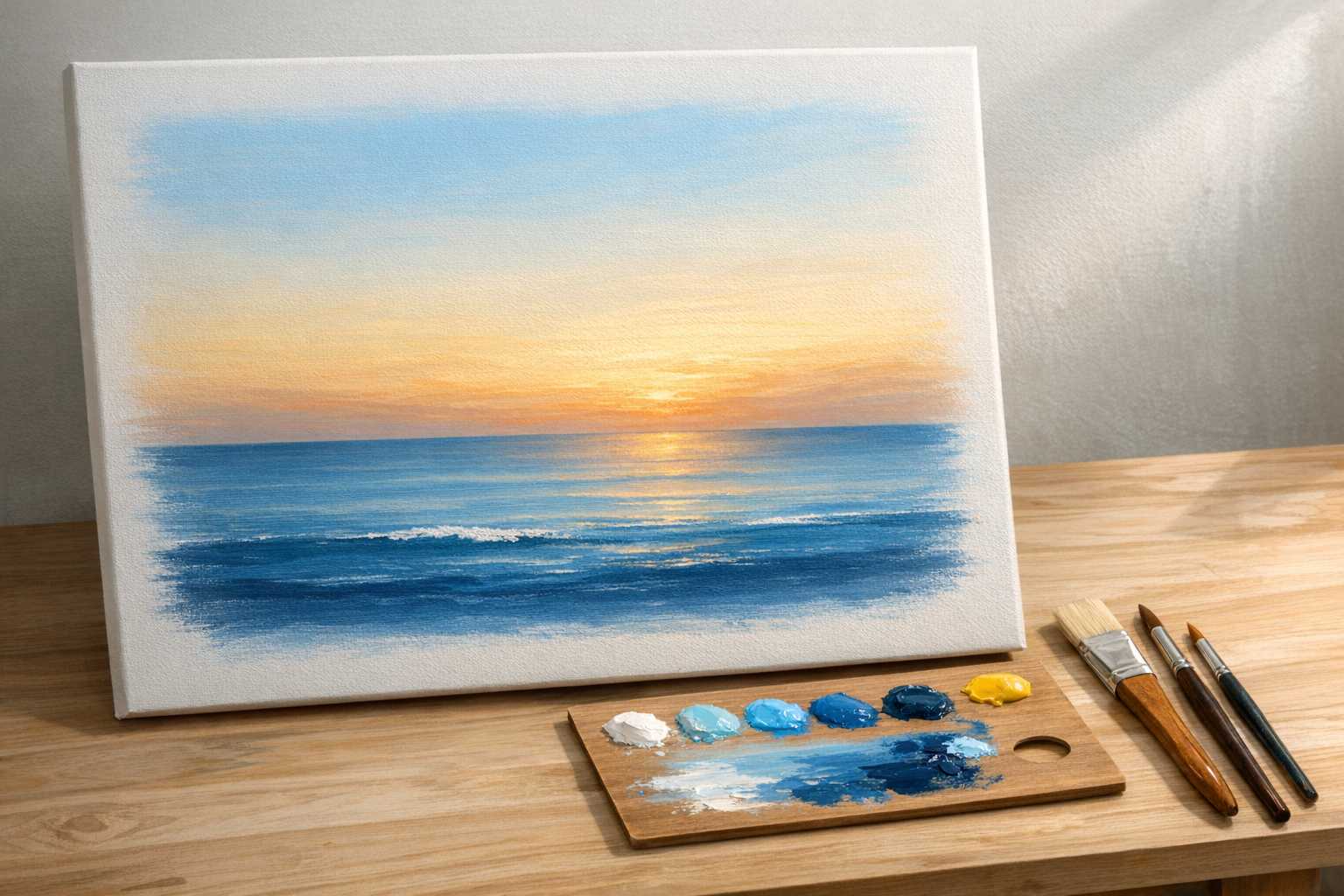
Our fascination with the ocean is perpetual. Its infinite elegance and tranquil setting are perfect for works of art. Currently, the simplicity of minimalist ocean art is making waves in the art scene.
The Appeal of Minimalist Ocean Art?
Less certainly equates to more in the context of seascape painting. The simplicity of minimalist ocean art eliminates unnecessary elements, highlighting the enchanting aspects of the sea that make it so captivating.
Creating beautiful ocean art doesn’t require the skills of a Picasso. Even with simple methods, the results can be astonishing. The secret lies in expressing the fundamental essence of the ocean with merely a few strokes.
Basic Colors for Your Oceanic Palette
Maintaining a straightforward yet effective color palette is key. Here are some indispensable colors for your effortless seascapes:
- Prussian blue – ideal for the depths of the sea
- Cerulean blue – excellent for lighter oceanic hues
- Titanium white – crucial for waves and highlights
- Raw umber – aids in establishing depth
- Payne’s gray – suitable for stormy skies
These five colors alone can generate a plethora of oceanic moods. First master these fundamental shades before venturing into an expanded palette.
Beginner-friendly Seascape Concepts
The Masterpiece of Horizon Line
Start off by painting the most fundamental element – the horizon line. Paint a straightforward horizontal line to differentiate the sky and the sea, using different tones of blue above and below the line.
This method instantly creates a sense of depth and is ideal for beginners who wish for immediate results.
Studying Gentle Waves
Concentrate on painting only one or two waves. Understand how water curves and moves. Highlight the wave crests using white paint.
Maintain a simple background and make waves the center of attention. This approach helps you understand the basics of water movement.
Silhouettes at Sunset
Paint an uncomplicated sunset over serene waters. Use warm oranges and pinks for the sky while keeping the water dark and reflective.
Introduce a basic silhouette – perhaps a solitary sailboat or a seabird. This provides an attention point without over-complicating the composition.
Advanced Minimalist Methods
The Impact of Negative Space
In pure minimalist art, negative space is a vital tool. By leaving areas unpainted you can subtly suggest foam, mist, or distant horizons.
Sometimes, what’s left unpainted can evoke more profound emotions than what’s painted. Trust the viewer’s imagination to fill in the voids.
Texturing Without Excessive Detail
Creating texture is possible through simple techniques. For unsteady seas, try palette knife work, or use a dry brush for delicate wave patterns.
You can indicate intricacy without having to paint every minuscule detail. Focus on the sentiment rather than pictorial accuracy.
The Magic of Color Temperature
Natural depth can be created using warm and cool colors. Use cool blues for distant waters while incorporating warmer tones for areas closer to the viewer.
This shift in temperature manipulates the eye, producing the illusion of a vast ocean.
Essential Tools
There’s no need to buy excessive art supplies. To create minimalist ocean art, you really only need a few key items:
- Flat brushes in 3 sizes: small, medium, and large
- One round detail brush
- Palette knife needed for mixing and creating texture
- Canvas or watercolor paper
- Elementary acrylic or watercolor paints
That’s about it! Quality should outrank quantity. It’s wiser to invest in premium brushes than to purchase numerous substandard ones.
Exploring Your Ocean Art Style
Every artist develops a unique style. Some might be drawn to stormy, dramatic seascapes while others may prefer calm, tranquil waters.
Play around with various moods and atmospheres. Try to paint the same scene at different times of the day. Take note of how the light can transform everything.
Avoid mimicking other artists. Instead, use their work as inspiration to develop your own distinctive style.
Common Pitfalls to Sidestep
Overcomplicating Your Paintings
The most common error in minimalist art is overdoing it. Recognize when to cease. Take a step back regularly to evaluate your work.
Sometimes a painting is complete sooner than you might think. Trust your instinct.
Neglecting Light Direction
Light brings vitality to your ocean. Determine your light source and ensure it remains consistent throughout your painting.
Inconsistent lighting can make artwork appear flat and puzzling.
Over-Painting the Waves
There’s no need to paint every single wave in the ocean. Suggest movement with a few well-placed strokes.
Allow the viewer’s imagination to fill in the gaps. Engaging artwork is often the result of this.
Tips for Painting Water Movement
Water is in constant flux, even when it appears still. Emulate this energy in your strokes.
Utilize horizontal strokes for calm seas. Vertical and diagonal strokes indicate rough waters. For rolling waves, curved strokes are perfect.
Practice these strokes on spare paper before applying them to your primary canvas.
Creating Atmosphere in Minimal Seascapes
Your color choices help create the emotional undertone. Cool blues and grays create a calm, peaceful atmosphere while warmer colors portray liveliness and spirit.
Dark, tumultuous colors express drama and force while light, ethereal tones evoke serenity and hope.
Before you start painting, think about the mood you wish to create. Let this guide your color selection and composition choices.
Developing a Collection of Ocean Artwork
Start off simple and gradually deepen your skills. Begin with a series of simple studies, concentrating on one aspect at a time.
Spend time on different horizons before moving on to wave studies. Build your confidence with small achievements.
Record your progress with photographs. You’ll be surprised at how quickly you improve with consistent practice.
Showcasing Your Minimalist Ocean Art
Minimalist ocean art pairs stunningly with sleek, simple frames. Light or natural wood frames are a great choice.
Group smaller pieces together for impact. A series of ocean studies can make a potent display on a wall.
Consider room lighting when hanging your ocean art. Natural light complements the serene, airy feel of seascapes.
The ocean provides an infinite source of inspiration for minimalist artists. Keep it simple, be patient with yourself, and relish the creative process. Your individual perception of the sea is ready to unfurl on canvas.
Remember, every accomplished artist began with their first brush stroke. The journey to creating your minimalist ocean art starts now. Grab your brushes and let the sea move you.